

Alimenta tu WOD con energía vegetal
No hay sensación comparable al silencio después de un WOD brutal. La tiza se asienta, la barra cae y cada fibra muscular de tu cuerpo vibra con el esfuerzo. En ese momento de agotamiento, tu cuerpo envía una señal clara: es hora de reparar y reconstruir.
La proteína es la herramienta esencial para esa reparación. Pero para los atletas que se esfuerzan al máximo, surge una pregunta común: ¿puede una dieta basada en plantas proporcionar la energía suficiente para un deporte tan intenso como el CrossFit? Estamos aquí para decirte que sí. De hecho, la proteína vegana adecuada ofrece ventajas únicas que pueden ayudarte a recuperarte mejor y volver más fuerte para tu próximo entrenamiento.
Las exigencias físicas del entrenamiento de alta intensidad

Cada vez que terminas un entrenamiento de alta intensidad, tus músculos sufren pequeñas microlesiones. Esto no es un daño en el sentido negativo. Considéralo como la señal que tu cuerpo envía para empezar a reconstruirse y ser más fuerte que antes. Al mismo tiempo, tus reservas de energía, conocidas como glucógeno, se agotan. Es como cuando la batería de tu teléfono se descarga rápidamente después de un uso intensivo; necesita una recarga completa y eficiente para volver a funcionar correctamente.
Si ignoras estas señales, lo notarás. Ese dolor muscular profundo que dura días, alcanzando un estancamiento en el rendimiento que parece imposible de superar, o sintiéndote completamente agotado incluso antes de empezar tu siguiente sesión. Aquí es donde una estrategia de nutrición inteligente se convierte en una parte fundamental de tu entrenamiento. Como demuestra una investigación publicada en el Journal of Sports Science & Medicine , los entrenamientos de alta intensidad aumentan significativamente el estrés metabólico y el daño muscular. Por ello, los suplementos específicos para la recuperación de CrossFit son esenciales para una recuperación eficaz.
Cómo la proteína vegana contribuye al máximo rendimiento
Hablemos del motor de desarrollo muscular de tu cuerpo, un proceso llamado Síntesis de Proteínas Musculares (SPM). Los aminoácidos son el combustible de este motor, y uno en particular, la leucina, es la clave que lo activa. Durante años, persistió el mito de que las proteínas vegetales eran "incompletas" y no cumplían la misma función que el suero. Esa idea está obsoleta.
Al combinar diferentes fuentes vegetales, como la proteína de guisante y de arroz integral, podemos crear un perfil completo de aminoácidos que proporciona todo el combustible que tu cuerpo necesita. Esto no es solo una teoría. Un estudio de 2019 publicado en la revista Sports demostró que los hombres que se suplementaron con proteína de guisante durante un programa de entrenamiento intenso experimentaron aumentos similares en el grosor muscular que quienes usaron proteína de suero. Esto convierte a la proteína vegana para la recuperación muscular en una opción con respaldo científico.
Las proteínas vegetales también ofrecen beneficios únicos. No contienen lactosa, que puede causar hinchazón y molestias digestivas como las que experimentan algunos atletas con las proteínas lácteas. Muchas también contienen fibra, que favorece la salud intestinal, un pilar fundamental para el bienestar general y la absorción eficiente de nutrientes. Comprender las diferencias entre las distintas opciones es fundamental, y puedes explorar algunas de las mejores proteínas en polvo que hemos analizado para compararlas.
4 factores clave para elegir tu proteína en polvo
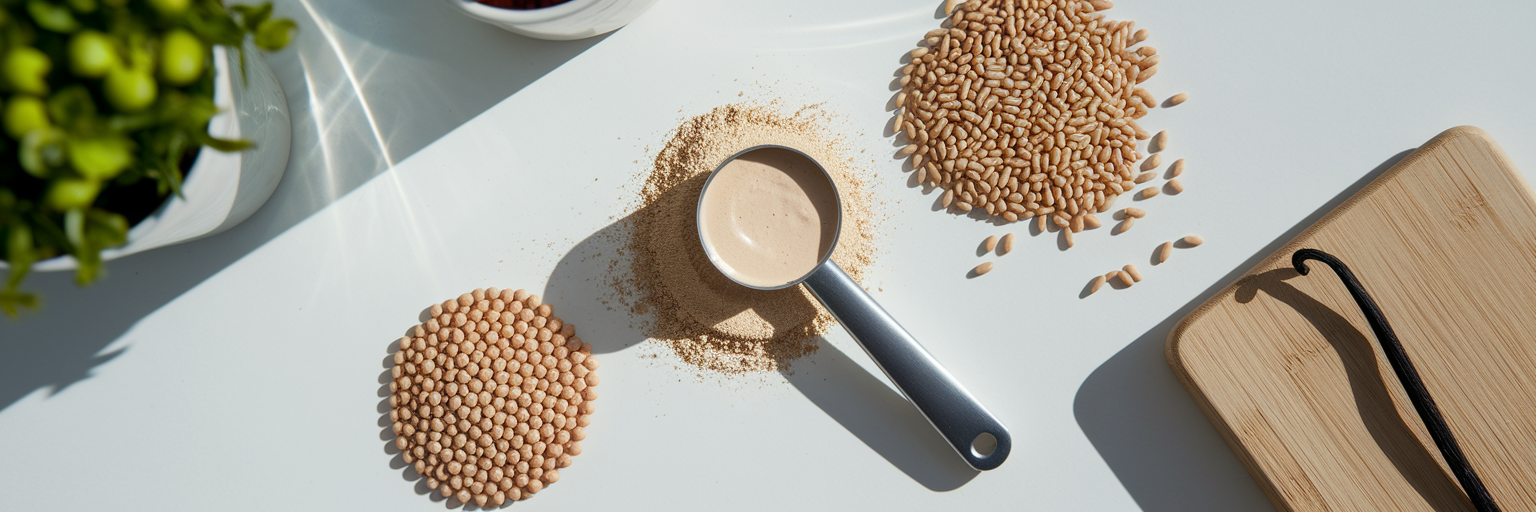
Con tantas opciones disponibles, elegir la proteína adecuada puede resultar abrumador. Aquí tienes una guía sencilla para ayudarte a elegir un polvo que realmente favorezca tu rendimiento.
Perfil completo de aminoácidos
Busca una mezcla de múltiples fuentes vegetales, como proteína de guisante, arroz o semilla de calabaza. Esto no es una táctica de relleno; es un método con respaldo científico para garantizar que obtengas los nueve aminoácidos esenciales necesarios para reparar y desarrollar eficazmente el tejido muscular.
Alto contenido de proteínas y pureza
Busca un polvo que aporte de 20 a 25 gramos de proteína por porción. Busca en la etiqueta "aislado de proteína", una presentación más filtrada que minimiza los carbohidratos y las grasas. Esta pureza es ideal para fomentar el crecimiento muscular magro sin aditivos innecesarios. Nuestras fórmulas, por ejemplo, aportan 25 gramos de aislado de proteína vegetal puro para ayudarte a alcanzar tus objetivos.
Ingredientes limpios y sencillos
Conviértete en un detective de etiquetas. Los mejores polvos tienen listas de ingredientes cortas y fáciles de identificar. Un polvo de proteína limpio y de alta calidad para atletas debe estar libre de edulcorantes artificiales como la sucralosa, colorantes sintéticos y rellenos innecesarios que pueden causar problemas digestivos y carecen de valor nutricional.
Certificaciones de terceros
Para los atletas de competición, esto es innegociable. Busca sellos como NSF Certified for Sport o Informed-Sport. Según NSF , su certificación ayuda a los atletas a tomar decisiones más seguras al garantizar que un producto está libre de sustancias prohibidas. Es una póliza de seguro para tu rendimiento y tu salud. Puedes explorar una gama de opciones limpias y eficaces en nuestra colección de suplementos de origen vegetal .
| Característica | Qué buscar | Por qué es importante para CrossFit |
|---|---|---|
| Perfil de aminoácidos | Una mezcla de múltiples fuentes vegetales (por ejemplo, guisantes, arroz, semillas de calabaza) | Asegura que los 9 aminoácidos esenciales estén presentes para impulsar la reparación muscular. |
| Proteína por porción | 20-25 gramos de aislado de proteína | Proporciona una dosis potente para desencadenar eficazmente la síntesis de proteínas musculares. |
| Lista de ingredientes | Ingredientes cortos y reconocibles; sin edulcorantes ni rellenos artificiales. | Maximiza el valor nutricional y evita problemas digestivos que pueden obstaculizar el rendimiento. |
| Pruebas de terceros | Sellos como NSF Certified for Sport o Informed-Sport | Garantiza que el producto está libre de sustancias prohibidas para la seguridad competitiva. |
Esta lista de verificación le ayudará a evaluar cualquier proteína en polvo para garantizar que cumpla con los altos estándares requeridos para el rendimiento deportivo y la recuperación.
Optimizando su estrategia proteica para obtener los máximos resultados
Elegir el polvo adecuado es el primer paso. El siguiente es usarlo eficazmente. Quizás hayas oído hablar de la "ventana anabólica", el período de 30 a 60 minutos después del entrenamiento para una absorción óptima de proteínas. Si bien un batido post-entrenamiento es excelente para impulsar la recuperación, la ciencia moderna sugiere que la ingesta diaria total de proteínas es el factor más importante para el crecimiento muscular.
Para los atletas activos, una recomendación común es consumir entre 1,6 y 2,2 gramos de proteína por kilogramo de peso corporal al día. Sin embargo, siempre es mejor consultar con un nutricionista para obtener asesoramiento personalizado. Para mejorar aún más tus resultados, considera combinar la mejor proteína vegana para CrossFit con creatina. Añadir una cucharada de monohidrato de creatina pura a tu batido puede ser una medida poderosa. Funciona ayudando a tus músculos a producir energía más rápidamente durante los breves e intensos momentos de esfuerzo que definen un WOD de CrossFit, permitiéndote esforzarte para lograr esas repeticiones adicionales. Si tienes curiosidad sobre cómo funciona, vale la pena comprender todos los beneficios de la creatina para la fuerza y la potencia .
Más allá de la botella mezcladora: formas sencillas de aumentar su consumo
Alcanzar tus objetivos proteicos no debería ser una tarea ardua. Una proteína vegetal versátil para deportistas se integra fácilmente en tus comidas diarias, lo que hace que la consistencia sea fácil y deliciosa.
- Energía Matutina: Mezcla una cucharada de proteína de vainilla o chocolate con tu avena o batido matutino. Le aporta una textura cremosa y te ayuda a sentirte saciado, a la vez que inicias el mantenimiento muscular temprano en el día.
- Horneado inteligente: Añade proteína sin sabor o de vainilla a la masa de panqueques, muffins o bocaditos energéticos caseros. Este sencillo truco convierte un capricho delicioso en una herramienta de recuperación eficaz.
- Sopas y salsas cremosas: Añade proteína sin sabor a una sopa de tomate cremosa o a una salsa para pasta. Aumenta significativamente el contenido proteico sin alterar el sabor que te encanta.
La constancia es lo que impulsa los resultados. Al encontrar maneras divertidas de incorporar proteínas a lo largo del día, construyes un estilo de vida de alto rendimiento que apoya tus objetivos tanto dentro como fuera del gimnasio. Para más inspiración, echa un vistazo a estas3 recetas fáciles de proteína vegana que realmente te encantarán .