
The Link Between Your Diet and Hormonal Rhythm
If you're an active woman, you know the feeling. One week, you’re hitting personal records at the gym, full of energy and drive. The next, your morning run feels like a monumental effort, and you’d rather be on the couch. We’ve all experienced that monthly cycle of energy peaks and valleys, and it can feel frustrating when it disrupts our fitness goals. But what if we stopped seeing it as a weakness and started viewing it as a natural rhythm we can work with?
Your diet is one of the most direct ways to support your body’s flow. The foods you choose can either add to the hormonal static or help create a clearer, more harmonious signal. A plant based diet for female hormones, in particular, can be a powerful ally in this process. It’s not about fighting your body, but about giving it the right tools to find its equilibrium.
By understanding how certain foods interact with your system, you can take back a sense of control over your well-being and performance. This isn't about restrictive eating; it's about making intentional choices that help you feel your best. At Beyond Good Foods, we believe in the power of clean, thoughtful nutrition to do just that. Let’s explore exactly how vegan protein can help you create a smoother, more predictable cycle for better workouts and a greater sense of well-being.
Your Hormonal Blueprint as an Active Woman

To work with your body, it helps to understand its language. For active women, two key hormones script much of our monthly experience: estrogen and progesterone. Think of estrogen as your "go-getter" hormone. It peaks before ovulation, often boosting your energy, mood, and strength, making it the perfect time for those tough workouts. After ovulation, progesterone takes the stage. Its role is to calm things down, preparing your body for rest and recovery.
Hormonal balance simply means these two are working in a healthy rhythm. Sometimes, however, lifestyle and diet can lead to what’s known as "estrogen dominance," where estrogen levels are high relative to progesterone. As a brief from the U.S. Department of Veterans Affairs explains, this imbalance can contribute to issues like inflammation and menstrual irregularities, which directly impact your athletic life. When your hormones are out of sync, you might notice that muscle repair feels slower, endurance wavers, and motivation is harder to find.
This is precisely why choosing the best protein for active women is so important. The right fuel doesn't just build muscle; it provides the foundational blocks that support your entire hormonal system, helping you train more consistently and recover more effectively throughout every phase of your cycle.
How Plant Proteins and Phytoestrogens Work
This is where plant proteins truly shine. Many plants contain compounds called phytoestrogens, and understanding phytoestrogens and hormonal health is key. Let's clear up any confusion right away. Think of phytoestrogens as smart hormone managers. They have a structure similar to your body’s own estrogen, but they are much weaker.
Here’s how they work their magic: when your natural estrogen levels are high, these plant-based compounds can gently bind to some of your estrogen receptors, effectively blocking a portion of the stronger, excess estrogen. This helps buffer your system. Conversely, if your estrogen levels are low, these same phytoestrogens can provide a mild, beneficial estrogenic effect. It’s a wonderfully intelligent balancing act.
Now, let's talk about soy. It often gets a bad rap, but the concern is largely misplaced. For most people, whole or minimally processed soy foods like tofu and edamame are fantastic, healthy choices. In fact, a study in Fertility and Sterility highlighted in BioCycle found that vegetable protein intake did not negatively impact key female hormones. Plant proteins, including those from soy, offer a clean, effective way to meet your fitness needs while supporting your body’s natural rhythm. When choosing a supplement, finding one that aligns with your goals is essential, and our guide to the best protein powders can help you navigate the options.
Top Vegan Protein Sources for Hormonal Support
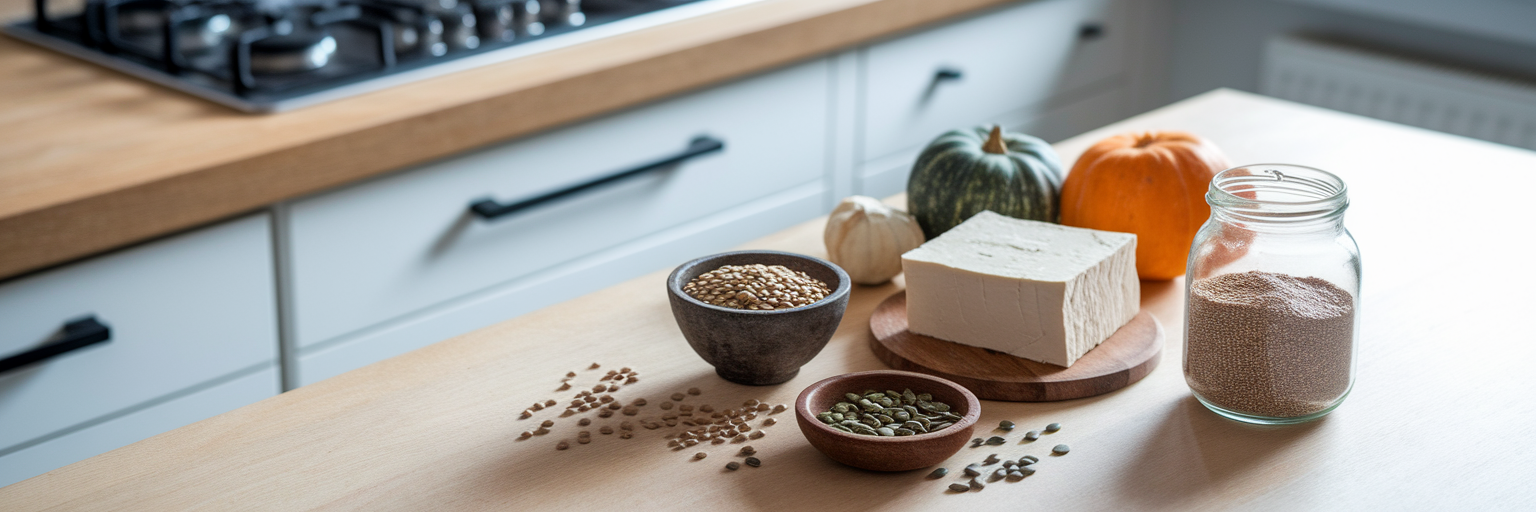
While a high-quality protein powder is a convenient tool, a food-first approach builds a strong foundation. Integrating specific foods that balance female hormones into your meals is easier than you think. These powerhouse plants are packed with the nutrients your body needs to thrive.
- Soy (Tofu, Edamame, Tempeh): As we discussed, these are rich in isoflavones that help buffer estrogen levels.
- Flaxseed: The number one source of lignans, a type of phytoestrogen that supports healthy estrogen metabolism. Just one tablespoon of ground flaxseed goes a long way.
- Legumes (Lentils, Chickpeas): Loaded with protein and fiber, they help stabilize blood sugar, which is crucial for hormonal harmony.
- Seeds (Pumpkin, Hemp): Pumpkin seeds are a fantastic source of zinc, essential for progesterone production, while hemp seeds offer a complete protein profile.
Here’s a quick look at how these foods contribute to your flow:
| Plant-Based Food | Key Hormone-Supporting Compound | Additional Nutrients | How It Helps Your Flow |
|---|---|---|---|
| Soy (Tofu, Tempeh) | Isoflavones | Complete Protein, Iron | Gently buffers high estrogen levels |
| Flaxseed (Ground) | Lignans | Omega-3s, Fiber | Supports healthy estrogen metabolism |
| Lentils & Chickpeas | Fiber & Protein | Magnesium, Vitamin B6 | Stabilizes blood sugar and supports progesterone |
| Pumpkin Seeds | Zinc | Magnesium, Iron | Crucial for progesterone production and thyroid health |
| Hemp Seeds | GLA (Gamma-Linolenic Acid) | Complete Protein, Omega-3s | Helps reduce inflammation and PMS symptoms |
This table highlights key plant-based foods and the specific compounds and micronutrients they contain to support hormonal balance. Nutrient data is based on general averages from USDA food composition databases.
Incorporating these foods is a delicious way to support your body. For inspiration, you can check out some of our easy-to-make vegan protein recipes. While whole foods are fantastic, a clean vegan protein powder ensures you consistently hit your goals, especially on busy days or right after a workout when your muscles need it most.
Putting It All Together: Your Daily Plan
Making this a part of your daily life should feel empowering, not overwhelming. A simple and effective strategy is to spread your protein intake evenly throughout the day, aiming for a serving every 3 to 4 hours. This helps keep your blood sugar stable, your energy levels consistent, and your muscles supplied with the amino acids they need for repair.
Here’s what a day of eating for hormonal support could look like:
- Morning: Start with oatmeal mixed with a scoop of unflavored vegan protein and a tablespoon of ground flaxseed to kickstart your day with fiber and phytoestrogens.
- Lunch: Build a large, colorful salad with chickpeas, mixed greens, and a sprinkle of pumpkin seeds for that crucial zinc boost.
- Post-Workout: Refuel with a delicious smoothie made with our Chocolate Vegan Protein, a banana, and a handful of spinach. It’s the perfect way to support muscle recovery.
- Dinner: Enjoy a satisfying tofu and broccoli stir-fry served over brown rice for a complete meal that’s both nourishing and delicious.
According to a systematic review in the journal Nutrients, active women often benefit from 1.4–2.2 grams of protein per kilogram of body weight daily. With a smart vegan protein for hormonal balance plan, hitting that target is completely achievable and sustainable.
The Future of Hormone-Focused Nutrition
The conversation around women’s health is shifting. We’re moving beyond one-size-fits-all advice and toward personalized nutrition that honors our unique biology. As awareness grows, we're seeing exciting trends like vegan protein blends fortified with specific micronutrients like zinc and magnesium to support different phases of the menstrual cycle. The Gatorade Sports Science Institute notes this growing interest in functional ingredients tailored for active women.
While this field is advancing quickly, we also believe in transparency: more large-scale, female-specific research is still needed. But what we know for sure is that listening to your body and making conscious food choices is a powerful first step. We encourage you to feel confident in your nutritional decisions and explore how clean, plant-based proteins can fit into your health journey.
Ready to learn more? Explore more insights and tips on our blog to continue building a stronger, more balanced you.