

Durante años, el mundo del fitness mantuvo una firme creencia: desarrollar músculo de forma significativa requería una dieta centrada en pechugas de pollo, huevos y proteína de suero. Todos podemos imaginarnos los clásicos recipientes de comida preparada para culturistas llenos de ellos. Pero ¿y si esa idea está desactualizada? La idea de que no se puede fortalecer con vegetales es uno de los mitos más persistentes en nutrición; sin embargo, innumerables atletas y la ciencia moderna cuentan una historia diferente. Una dieta vegana bien estructurada para el crecimiento muscular no solo es posible; es una forma poderosa de alcanzar tus objetivos de fitness.
Esta guía es tu guía práctica para hacerlo bien. No estamos aquí solo para decirte que funciona. Estamos aquí para mostrarte cómo. Te explicaremos los nutrientes esenciales que tu cuerpo necesita, las mejores fuentes de proteína vegetal para tus entrenamientos y cómo preparar comidas equilibradas que fomenten tu fuerza. Piensa en esto como un plan práctico y práctico para ganar músculo, sentirte bien y tomar una decisión que se ajuste a tu salud y valores. ¡Comencemos!
Fundamentos nutricionales para una mayor fuerza a base de plantas
Si bien la proteína, con razón, acapara la mayor parte de la atención en las conversaciones sobre desarrollo muscular, no funciona de forma aislada. Tu cuerpo es un sistema complejo, y alcanzar el máximo rendimiento con una dieta a base de plantas implica prestar atención a los micronutrientes que contribuyen a todo, desde la producción de energía hasta la recuperación. Piensa en ellos como el equipo esencial que mantiene todo funcionando a la perfección. Sin ellos, incluso las mejores fuentes de proteína no pueden cumplir su función eficazmente.
Más allá de las proteínas: micronutrientes clave para el éxito
Para desarrollar un cuerpo verdaderamente resistente, tu enfoque debe ir más allá de las proteínas. Según una revisión de la revista Nutrients , los atletas veganos deben prestar mucha atención a micronutrientes específicos para prevenir deficiencias que podrían afectar el rendimiento. Estos son los factores clave:
- Hierro: Este mineral es fundamental para el transporte de oxígeno. Ayuda a transportarlo a los músculos, lo cual es fundamental para resistir un entrenamiento intenso. Lo puedes encontrar en las lentejas, las espinacas y el tofu .
- Zinc: Esencial para reparar el tejido muscular y mantener un sistema inmunitario sano, el zinc es indispensable para la recuperación. Consume abundantes semillas de calabaza, garbanzos y frutos secos .
- Calcio y vitamina D: Estos dos son aliados. El calcio es vital para las contracciones musculares y la vitamina D ayuda a que el cuerpo lo absorba. Consíguelos en leches vegetales fortificadas y tofu , y toma el sol para obtener un aporte natural de vitamina D.
- Ácidos grasos omega-3: Estas grasas saludables ayudan a controlar la inflamación, lo que puede acelerar la recuperación entre sesiones de entrenamiento. Las semillas de lino, las semillas de chía y las nueces son excelentes fuentes.
Para profundizar más en la nutrición basada en plantas, siempre puedes explorar nuestro blog para conocer otros temas de bienestar.
Lo innegociable: la vitamina B12
Aquí hay una verdad importante: la vitamina B12 no se encuentra de forma natural en los alimentos vegetales. Es producida por microorganismos del suelo y es crucial para el metabolismo energético y la función nerviosa. Una deficiencia puede provocar fatiga y debilidad, que es lo último que se desea cuando se intenta fortalecerse. Por esta razón, cualquier persona que siga una dieta a base de plantas debe obtener vitamina B12 de alimentos fortificados como leches vegetales y levadura nutricional o, de forma más fiable, mediante suplementos . Es un paso sencillo que marca una gran diferencia en la salud general y los niveles de energía.
Las mejores fuentes de proteínas de origen vegetal
Ahora, hablemos del ingrediente principal: la proteína. La cuestión no es si puedes obtener suficiente proteína con una dieta vegana, sino saber qué fuentes te ofrecen el mejor rendimiento por tu dinero. Crear un plan de alimentación vegano sólido y rico en proteínas empieza por identificar los nutrientes esenciales. La variedad es fundamental, ya que comer una mezcla de diferentes alimentos te ayuda a obtener una gama completa de aminoácidos, los componentes básicos de los músculos. Aquí es donde puedes encontrar las mejores fuentes de proteína vegana para complementar tus comidas.
Proteínas vegetales de gran impacto
Algunos alimentos vegetales son verdaderas fuentes de proteínas. El seitán, el tempeh y el tofu son fantásticos por su increíble densidad proteica y versatilidad. Puedes usarlos para crear platos sabrosos y nutritivos que reemplazan fácilmente la carne tradicional. Además, no olvides los alimentos básicos más sencillos. Las lentejas, los garbanzos y otras legumbres no solo son asequibles y accesibles, sino que también están llenas de proteínas y fibra. Incluso los cereales y las semillas pueden contribuir significativamente. Espolvorear semillas de cáñamo en la avena o usar quinoa como base para tu almuerzo son maneras sencillas de aumentar tu ingesta diaria de proteínas.
Hacer que las proteínas sean prácticas y deliciosas
Todos tenemos esos días en los que cocinar una comida completa se siente demasiado, especialmente después de un entrenamiento intenso. Ahí es cuando la comodidad se vuelve clave. Una proteína vegana en polvo limpia y de alta calidad es una herramienta increíblemente efectiva para alcanzar tus objetivos diarios sin complicaciones. Un batido post-entrenamiento con una cucharada de nuestra proteína vegana suave y deliciosa proporciona 25 g de proteína completa para impulsar la recuperación de inmediato. Es una forma sencilla de asegurar que tus músculos obtengan lo que necesitan, cuando lo necesitan, facilitando la búsqueda de la proteína vegetal adecuada para el crecimiento muscular .
| Fuente de proteína | Proteína por porción (aprox.) | Mejor para |
|---|---|---|
| Tempeh | 34 g por 1 taza | Cenas, salteados, sándwiches. |
| Seitán | 25 g por 3,5 oz (100 g) | Sustituto de carne en platos salados |
| Lentejas | 18 g por 1 taza (cocido) | Sopas, guisos, ensaladas, hamburguesas vegetarianas. |
| Tofu (extra firme) | 20 g por 1 taza | Revueltos, salteados, platos horneados |
| Edamame | 17 g por 1 taza (sin cáscara) | Snacks, ensaladas, guarniciones |
| garbanzos | 15 g por 1 taza (cocido) | Ensaladas, currys, hummus |
| Semillas de cáñamo | 10 g por 3 cucharadas | Batidos, ensaladas, cobertura de avena. |
| Quinoa | 8 g por 1 taza (cocido) | Cuencos de cereales, guarniciones, ensaladas |
Nota: El contenido de proteína es aproximado y puede variar según la marca y el método de preparación. Los datos se recopilan de fuentes como el Centro de Datos Alimentarios del USDA .
Equilibrar las macros para una ganancia muscular óptima
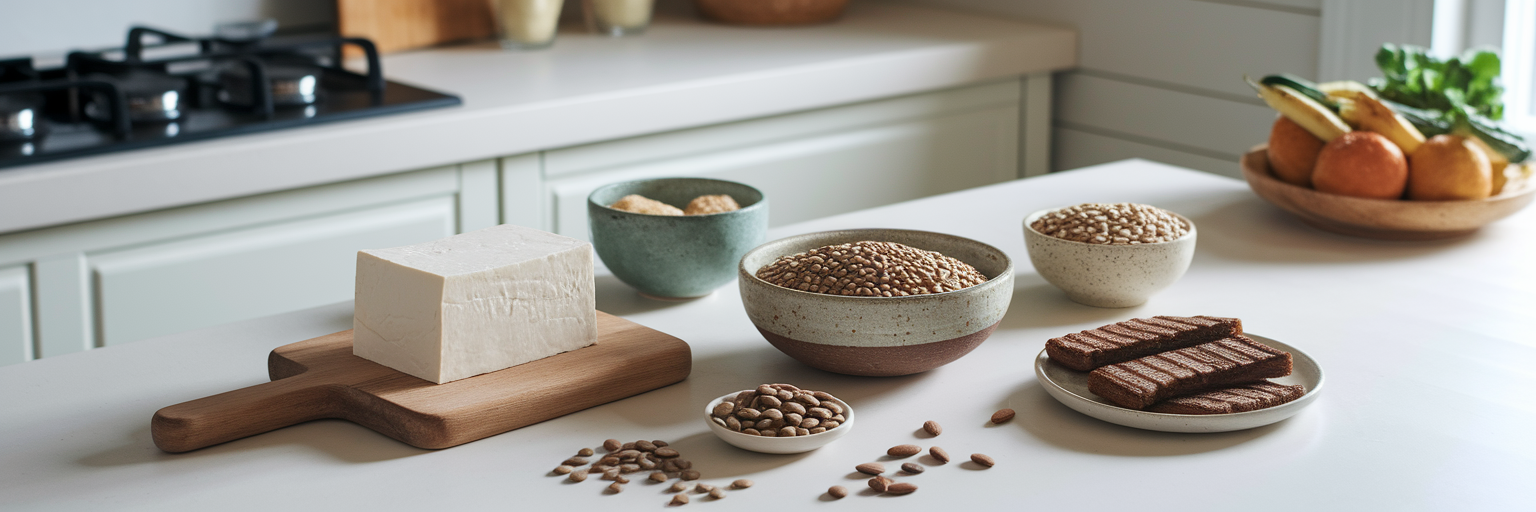
Saber qué comer es el primer paso. Saber cuánto comer es lo que convierte esos buenos alimentos en una poderosa estrategia para desarrollar músculo. Aquí es donde entran en juego los macronutrientes, o "macros": proteínas, carbohidratos y grasas. Lograr el equilibrio adecuado garantiza que tu cuerpo tenga el combustible para rendir, los elementos necesarios para construir y la energía para recuperarse. Como señalan fuentes como Healthline , un buen objetivo de ingesta de proteínas para el crecimiento muscular es de entre 1,6 y 2,2 gramos por kilogramo de peso corporal . Para una persona de 75 kg (165 libras), eso equivale a unos 120-165 gramos de proteína al día.
Pero la proteína es solo una parte de la ecuación. Los carbohidratos complejos son la principal fuente de energía de tu cuerpo. Impulsan tus entrenamientos y reponen las reservas de glucógeno en tus músculos después del entrenamiento. Sin suficientes carbohidratos, te sentirás lento y tu rendimiento se verá afectado. Concéntrate en fuentes como la avena, el boniato, el arroz integral y la quinoa .
Por último, no le temas a las grasas saludables . Son esenciales para la producción de hormonas, incluyendo las que favorecen el crecimiento muscular. Además, son ricas en calorías, lo que puede ser útil cuando intentas comer lo suficiente para aumentar tu masa muscular. Incorpora fuentes como aguacates, frutos secos y semillas en tus comidas diarias. Una forma sencilla de visualizar esto es el modelo del plato: procura que un tercio de tu plato sea una fuente principal de proteínas, un tercio de carbohidratos complejos y un tercio de verduras fibrosas , con una porción de grasas saludables añadidas. Para ver algunos ejemplos deliciosos de cómo funciona esto, puedes encontrar ideas geniales ennuestra publicación sobre recetas veganas fáciles de proteínas .
Ejemplo de plan de alimentación vegano con alto contenido proteico
La teoría es genial, pero verla en acción la hace real. ¿Cómo es realmente un día de alimentación para el crecimiento muscular? Este ejemplo de plan de alimentación vegano alto en proteínas está diseñado para ser delicioso, satisfactorio y estar repleto de los nutrientes que necesitas para impulsar tus objetivos de fitness. Considéralo una plantilla que puedes adaptar a tus gustos y horarios. Para mayor variedad, recursos como EatingWell también ofrecen excelentes planes elaborados por dietistas.
Un día de combustible para el crecimiento muscular vegano
- Desayuno: Un sustancioso revuelto de tofu hecho con tofu firme desmenuzado, frijoles negros, cebolla y pimientos. Sírvalo con aguacate sobre pan tostado integral.
- Post-Entrenamiento/Almuerzo: Un batido de recuperación hecho con una cucharada de nuestra Proteína Vegana de Chocolate, un plátano, un puñado de espinacas y leche de almendras. Acompañado de un tazón grande de quinoa con garbanzos tostados, brócoli y aderezo de tahini.
- Cena: Un reconfortante pastel de pastor de lentejas con una cobertura cremosa de batata y una guarnición de judías verdes.
- Snacks: Mantenga su energía entre comidas con rodajas de manzana y mantequilla de maní, un puñado de almendras o una bebida pre-entrenamiento mezclada con nuestro monohidrato de creatina puro para una ventaja de rendimiento adicional.
Ajustándose a sus objetivos
Este plan de alimentación es un excelente punto de partida, pero puedes ajustarlo fácilmente según tus objetivos específicos. Si estás en fase de volumen y quieres maximizar la ganancia muscular, simplemente aumenta el tamaño de las porciones de carbohidratos y grasas saludables para crear un superávit calórico. Si tu objetivo es definir tu masa muscular, mantén una ingesta alta de proteínas, pero crea un ligero déficit calórico reduciendo moderadamente las porciones de carbohidratos y grasas. La clave está en escuchar a tu cuerpo y ajustarlo según sea necesario.
Consejos para preparar comidas de forma consistente y duradera
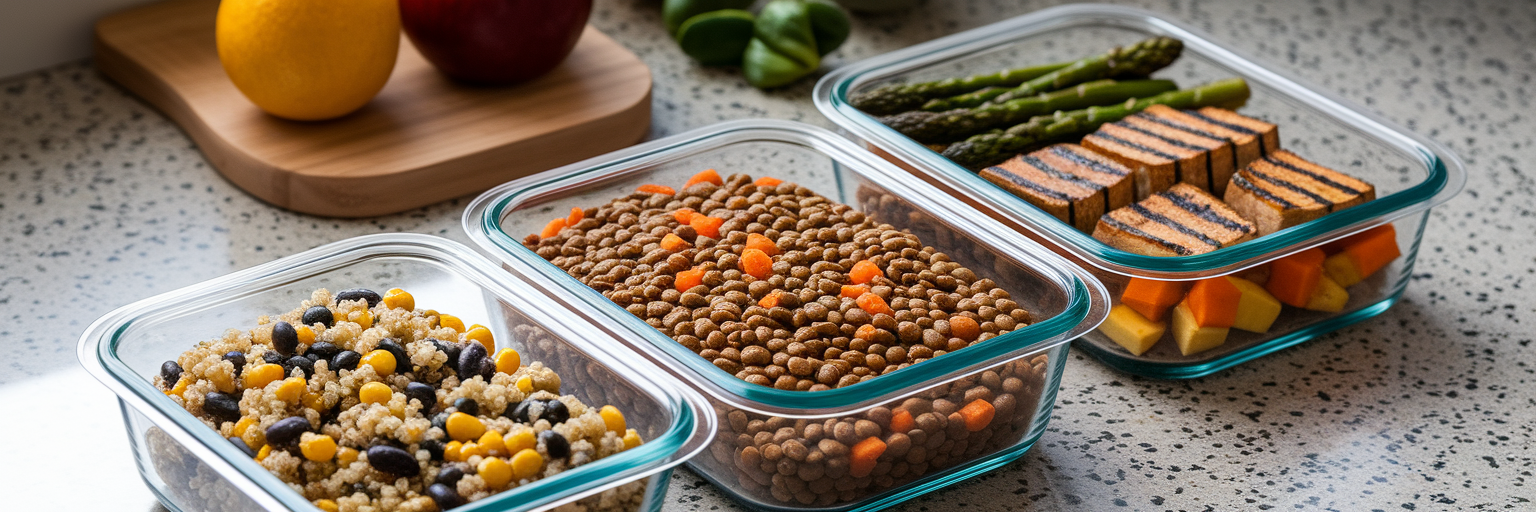
Puedes tener el plan perfecto, pero el verdadero secreto para alcanzar tus metas es la constancia. La vida es ajetreada y es fácil caer en viejos hábitos si no estás preparado. Aquí es donde un poco de planificación es de gran ayuda. La preparación efectiva de comidas veganas para atletas no se trata de pasar todo el domingo en la cocina; se trata de hacer pequeños esfuerzos inteligentes que te preparen para una semana exitosa. El objetivo es que la opción saludable sea la opción fácil.
A continuación se ofrecen algunos consejos prácticos para mantener el rumbo:
- Conceptos básicos de la cocina por lotes: Al principio de la semana, cocina una gran cantidad de quinoa, arroz integral o lentejas. Tenerlos listos facilita la preparación de las comidas.
- Prepara tu proteína: Prensa un bloque de tofu o deja marinar un poco de tempeh durante la noche. Esto reduce el tiempo de cocción y le da un sabor intenso.
- Picar con antelación: Lava y pica las verduras y guárdalas en recipientes herméticos. Estarán listas para añadirlas a un salteado o ensalada.
- Snacks para dividir en porciones: cree bolsas de frutos secos, semillas o edamame listas para llevar, de modo que siempre tenga una opción saludable cuando ataque el hambre.
Considera usar una app de seguimiento de alimentos durante las primeras semanas para tener una idea clara de tu consumo y asegurarte de que alcanzas tus objetivos de proteínas y calorías. Construir un cuerpo fuerte y saludable con una dieta basada en plantas es un camino empoderador, y estamos aquí para apoyarte en cada paso. Te invitamos a explorar nuestra gama completa de productos para encontrar las herramientas que te ayudarán a lograrlo. ¡Comparte tus propias experiencias de preparación de comidas en los comentarios!