

The Physical Toll of a Long Trail
You know the feeling. It’s that last mile on a steep trail in the Rockies, where every step is a negotiation between your legs and your willpower. Or maybe it’s the end of a long day on the Appalachian Trail, when you finally drop your pack and your shoulders sigh with relief. Your muscles are humming with a deep, satisfying ache. That feeling is the sign of a day well spent, but it’s also your body sending a clear signal: it’s time to repair.
That soreness comes from microscopic tears in your muscle fibers, a natural result of challenging them. During a long hike, you also burn through your body's primary energy source, glycogen. Proper recovery isn't just about feeling less stiff the next morning. It’s about giving your body what it needs to rebuild those muscle fibers stronger than before. This process is essential for preventing injuries and building the endurance required for your next adventure, especially on multi-day treks.
Effective muscle recovery after hiking is what turns a strenuous effort into real strength. So, how do you kickstart that repair process when you’re miles from a kitchen? It all begins with protein, the fundamental building block your body needs to mend and grow.
How Protein Powers Muscle Repair

So, what exactly happens when you give your body protein after a tough hike? Think of your muscles as a brick wall and the hike as an event that knocked a few bricks loose. Protein provides the amino acids, which are like a dedicated repair crew that arrives on-site to patch things up. This biological process is called Muscle Protein Synthesis (MPS), and it’s how your body rebuilds and strengthens muscle tissue.
You may have heard about the "anabolic window," a supposed 30-minute period post-exercise for optimal protein intake. While the timing isn't quite that rigid, the principle holds true. Consuming protein within a few hours after you finish hiking gives that repair crew the materials it needs right when it's most effective. Research highlighted by wellness experts at Clif Bar suggests that a dose of 20-30 grams of protein is highly effective for stimulating muscle repair after a workout.
This amount provides enough amino acids to maximize the rebuilding process. While protein rebuilds the muscle structure, other compounds help power the entire system. For instance, while not the focus here, you can learn more about the benefits of creatine monohydrate for energy and performance. The key takeaway is that a timely, sufficient protein source is your first and most important step toward a strong recovery. But for a hiker, that source needs to be practical, portable, and powerful.
The Backpacker's Advantage: Vegan Protein Powder
When you’re carrying everything on your back, every ounce matters. This is where vegan protein powder becomes a hiker's best friend. It’s not just about getting protein; it’s about getting it in a format that works on the trail. It offers a unique combination of benefits that other protein sources just can't match.
- Lightweight & Compact: This is the most obvious advantage. A few scoops of powder take up minimal space and add almost no weight to your pack, making it the ultimate lightweight protein for backpacking compared to bulky alternatives like jerky or heavy cans of tuna.
- Convenience & Shelf-Stability: It’s non-perishable and needs nothing more than water to prepare. You can have a recovery shake ready in seconds, whether you're at a remote campsite or taking a break by a stream. No cooking, no mess.
- Complete Amino Acid Profile: A common myth is that plant proteins are "incomplete." High-quality vegan protein blends are scientifically formulated with multiple plant sources to provide all the essential amino acids your muscles need for full repair. Furthermore, studies reviewed by Verywell Health show that plant-based sources like pea protein are just as effective as whey for muscle recovery.
- Digestive Ease: Intense physical activity can sometimes make digestion tricky. A dairy-free vegan protein for hikers is often gentler on the stomach, helping you avoid the bloating or discomfort that can come with whey-based proteins. It’s a clean, efficient plant-based hiking food that works with your body, not against it.
To put it in perspective, here’s how it stacks up against other common trail proteins:
| Protein Source | Weight & Portability | Shelf-Life | Preparation Needed |
|---|---|---|---|
| Vegan Protein Powder | Very High (lightweight, compact) | Excellent (12+ months) | Minimal (add water) |
| Beef Jerky | High (lightweight but can be bulky) | Good (weeks to months) | None |
| Nuts & Nut Butter | Moderate (energy-dense but heavy) | Good (weeks to months) | None |
| Canned Tuna/Chicken | Very Low (heavy and bulky) | Excellent (years) | Minimal (open can) |
| Hard-Boiled Eggs | Very Low (fragile, heavy) | Poor (1-2 days without refrigeration) | Pre-hike boiling |
Easy and Delicious Post-Hike Recovery Recipes
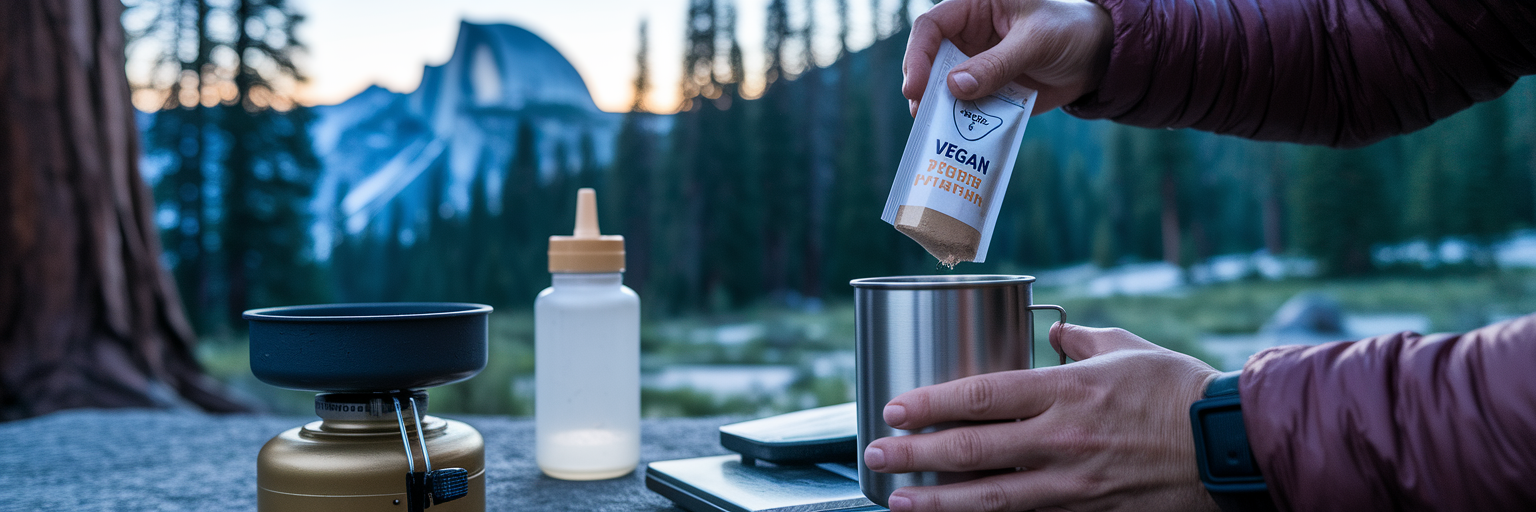
Knowing you need protein is one thing; making it happen on the trail is another. The good news is, it doesn’t have to be complicated. Here are a few simple, delicious ways to refuel your body after a long day of hiking.
- The Ultimate Recovery Shake: This is the quickest and easiest option. Simply mix one scoop of your favorite vegan protein powder with 8-12 ounces of water in a shaker bottle. A formula with a smooth, non-chalky texture makes all the difference here, turning a simple necessity into an enjoyable post-hike recovery drink. Shake for 30 seconds, and your muscles will thank you.
- No-Bake Trailhead Protein Bites: You can make these ahead of time for a grab-and-go snack. In a bag, mix 1 cup of rolled oats, 2 scoops of vanilla or chocolate protein powder, a pinch of salt, and a sprinkle of cinnamon. When you’re ready to eat, add a few spoonfuls of nut butter and a splash of water, then mix and roll into small bites. They’re packed with protein, carbs, and healthy fats.
- Protein-Boosted Oatmeal: A warm meal at a campsite can feel like pure luxury. Give your standard instant oatmeal a major upgrade by stirring in a scoop of vanilla or unflavored protein powder after you add the hot water. It creates a creamy, satisfying breakfast or dinner that replenishes your energy stores and kickstarts muscle repair for the day ahead. Unflavored protein is also versatile enough to be stirred into savory camp meals like soups or lentil dishes.
These are just starting points. For more inspiration on how to use your protein powder, check out these three easy vegan protein recipes you'll actually crave.
Fine-Tuning Your Trail Recovery Strategy
A single protein shake is a great start, but a truly effective recovery plan is a holistic strategy. Think of it as part of your hiking skillset, just like reading a map or packing your bag efficiently. Once you have your protein source sorted, consider these other elements to help your body bounce back faster.
First, hydration is non-negotiable. Water is essential for transporting nutrients to your muscles and flushing out metabolic waste. Protein synthesis itself requires water, so sipping consistently after your hike is just as important as your recovery shake. Second, not all protein powders are created equal. Premium formulas often include added ingredients to support recovery. For example, as seen in products like Vega's Performance Protein, ingredients like BCAAs (Branched-Chain Amino Acids) can help reduce muscle soreness, while natural anti-inflammatories like tart cherry can soothe tired tissues.
On multi-day treks, consistency is everything. Recovery isn't a one-time event; it's an ongoing cycle. Making protein a daily habit on the trail ensures your muscles have a constant supply of building blocks to repair day after day. Finally, listen to your body. Some days you’ll feel more fatigued than others. Pay attention to those signals and adjust your nutrition accordingly. Developing a smart nutrition strategy is an ongoing journey, and you can find more tips and insights on our blog.
Fuel Your Next Adventure
At the end of the day, smart recovery is what allows you to keep doing what you love. We've seen that long hikes demand serious muscle repair, protein is the key to that process, and vegan protein powder is the perfect practical solution for any backpacker.
Treating your recovery with the same importance as your hiking boots or your tent is what separates a good hike from a great one. It’s not an afterthought; it’s essential gear for your body. With the right fuel, you can push your limits, explore farther, and be ready for whatever the next trail brings.
Ready to fuel your next adventure? Explore our full range of clean, plant-based proteins like the Beyond Good Foods vegan protein to find the perfect match for your recovery needs. We'd also love to hear from you! Share your favorite post-hike recovery tips in the comments below.