

The Post-Match Feeling and a Plant-Powered Solution
We all know that feeling. You walk off the court after a tough three-setter, a mix of pride and the slow, creeping ache in your legs, shoulders, and core. It’s the kind of muscle fatigue that signals a great match but also makes you wonder if you’ll be ready to play again tomorrow. What if you could actively influence how quickly you bounce back?
Your post tennis match recovery isn't something that just happens. It’s a strategic part of your training. The choices you make in the minutes after your match directly impact your performance for the rest of the week. This is where a clean, simple, and effective tool comes into play: vegan protein powder.
Think of it as the first step in your repair process. Consuming a high-quality plant protein right after you play helps kickstart muscle repair, reduce soreness, and get you ready for your next game. It’s not about complicated routines, but about giving your body exactly what it needs, right when it needs it most.
Why Your Muscles Crave Protein After Tennis
That satisfying ache you feel is the result of the intense physical demands of tennis. Every sprint to the net, every powerful serve, and every deep lunge creates tiny micro-tears in your muscle fibers. This is a normal and necessary part of getting stronger, but your body needs the right materials to rebuild.
Consider protein your body’s dedicated repair crew. These essential nutrients arrive on the scene to mend those muscle fibers, rebuilding them stronger than before. During a typical one or two-hour match, your body can enter a "protein deficit." As research on tennis players highlights, muscle protein breakdown can actually outpace its synthesis, leaving your muscles in need of support.
Ignoring this need has consequences. You might experience prolonged soreness, slower recovery times, and find that the strength gains from your hard work on the court just aren't showing up. This isn't just a concern for bodybuilders. Protein is an essential tool for any vegan protein for athletes looking to improve their game and stay consistent. Providing your body with protein after a match closes that deficit and ensures your muscles have everything they need to recover efficiently.
Nailing Your Protein Numbers for Peak Recovery

So, how much protein do you actually need? Active individuals require more than those who are sedentary. To support this, the American College of Sports Medicine suggests that athletes consume between 1.2 to 2.0 grams of protein per kilogram of body weight daily. For those of us in the U.S., that translates to about 0.55 to 0.91 grams per pound.
Let's make that practical. If you weigh 154 pounds, your daily protein target would be between 84 and 140 grams. Trying to get all of that from whole foods alone can feel like a full-time job. This is where a high-quality protein supplement becomes incredibly helpful. A single 25-gram serving of a clean vegan protein powder can make hitting your daily goal much more manageable, answering the question of how much protein after tennis with a simple solution.
By incorporating one of our premium plant-based protein powders into your routine, you can easily meet your body’s demands and support your recovery. The table below breaks down how these recommendations apply to different body weights.
| Player's Body Weight (lbs) | Recommended Daily Protein Intake (grams) | Equivalent in Protein Shakes (25g/serving) |
|---|---|---|
| 120 lbs | 66 - 109 g | ~2.5 - 4.5 servings |
| 150 lbs | 82 - 136 g | ~3 - 5.5 servings |
| 180 lbs | 99 - 163 g | ~4 - 6.5 servings |
| 210 lbs | 115 - 191 g | ~4.5 - 7.5 servings |
Note: This table provides estimated daily protein targets based on the American College of Sports Medicine's recommendation of 1.2-2.0 g/kg for active individuals. Total intake should be spread throughout the day, not consumed in one sitting.
Timing is Everything: The Post-Match Nutrition Window
Now that you know how much protein you need, let's talk about when to take it. After a tough match, your body enters a state where it’s incredibly receptive to nutrients. This period, often called the "anabolic window" or "golden hour," typically lasts for about 30 to 60 minutes post-exercise.
During this window, your muscles are primed for absorption. Consuming protein at this time can significantly accelerate muscle protein synthesis, the process that repairs and rebuilds muscle tissue. A study published in Frontiers in Nutrition confirms that timely protein intake enhances recovery and performance outcomes. Waiting too long is a missed opportunity. You’ve put in the hard work on the court, and delaying your nutrition makes that effort less effective.
The strategy is simple: have your protein shake ready to go. Keep a shaker bottle with a scoop of powder in your tennis bag. As soon as you finish your cool-down, just add water, shake, and drink. It’s the easiest way to ensure your muscles get the fuel they need right when they can use it best.
Quick and Tasty Vegan Recovery Fuel
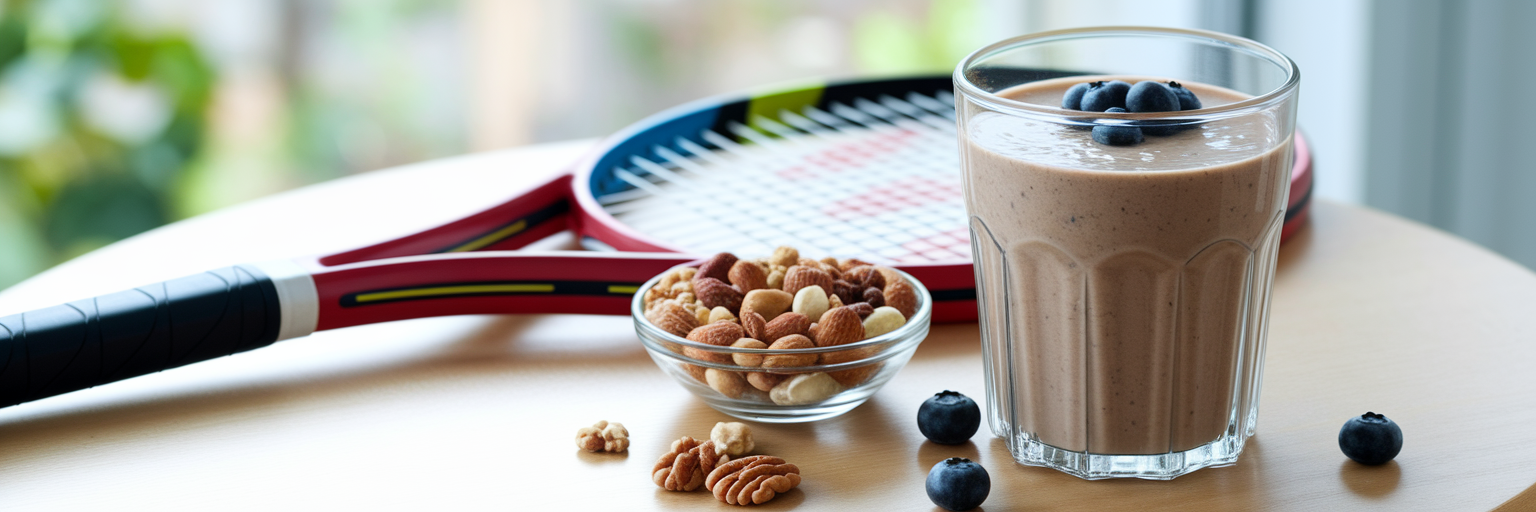
Recovery nutrition should be effective, but it also needs to be simple and delicious. A post-match shake is one of the easiest ways to refuel. For a perfect blend of muscle-repairing protein and energy-restoring carbohydrates, try this simple recipe:
Mix one scoop of our Chocolate Vegan Protein, one banana, and a cup of almond or oat milk. The protein gets to work on your muscles, while the natural sugars in the banana help replenish your glycogen stores, which are your body's primary energy source.
If you're short on time or need something you can pack easily, here are a few other great plant based recovery snacks:
- A pre-made shake with Beyond Good Foods protein powder.
- Homemade energy balls using protein powder, oats, and dates.
- A handful of almonds and an apple.
- A plant-based protein bar with at least 15g of protein.
Finding what works for you is part of the fun. For more creative ideas, check out some of the recipes we've put together to help you stay fueled and satisfied.
Debunking Myths About Plant-Based Protein
A common question we hear from athletes is, "Is vegan protein as good as whey for recovery?" It's a valid concern. The effectiveness of a protein comes down to its amino acid profile. A "complete protein" is one that contains all nine essential amino acids your body needs for muscle repair.
While some individual plant sources are incomplete, the best vegan protein powder products solve this by using smart blends. We combine different plant sources, like pea and rice protein, to create a complete amino acid profile that is just as effective as whey. In fact, as Clif Bar discusses, research shows that plant-based proteins can stimulate muscle synthesis to a comparable degree when matched for protein content.
Plus, plant proteins come with unique advantages. They are often easier to digest because they don't contain lactose, and they represent a more sustainable choice for the planet. With a high-quality formula, you get all the recovery benefits without compromise. If you're curious about what to look for, our guide can help you choose the right protein for your goals.
Beyond Protein: The Roles of Hydration and Carbs
While protein is a star player in your recovery plan, it works best as part of a team. Don't forget two other critical components: hydration and carbohydrates. Even minor dehydration can slow down muscle function and repair, so sipping water throughout the day and after your match is non-negotiable.
During a long match, you also lose important electrolytes through sweat. A great tip is to mix your protein powder with water or an electrolyte drink to tackle two needs at once. Carbohydrates are also essential for refilling your muscle energy stores, ensuring you’re ready for your next session.
Think of it as a simple, winning formula: Timely Protein + Smart Carbs + Ample Fluids = Faster Recovery. By focusing on these three elements, you give your body a complete toolkit to repair, refuel, and come back stronger. Explore our range of muscle recovery supplements US and find the perfect partner for your fitness journey. For more tips, head over to our blog, and feel free to share this guide with your tennis friends!