
We’ve all been there. You commit to a weight loss plan, the number on the scale starts to drop, but you feel weaker, not stronger. That’s because the scale doesn’t tell the whole story. It can’t distinguish between fat loss and the muscle you’ve worked so hard to build. The goal isn't just to lose weight; it's about changing your body composition. This guide will show you how to do just that.
The Science of Sparing Muscle During Weight Loss
To lose weight, you need to be in a calorie deficit, which simply means you’re consuming fewer calories than your body uses. While this is the first step, it introduces a challenge. When your body doesn't get enough energy from food, it can start breaking down muscle tissue for fuel, a process called muscle catabolism. This is where protein becomes your best friend.
Think of protein as a bodyguard for your muscles. When your intake is high enough, it signals your body to preserve that valuable muscle tissue. It does this by stimulating muscle protein synthesis (MPS), the process your body uses to repair and build muscle. A steady supply of protein keeps MPS active, even when you’re eating fewer calories overall.
There’s another benefit, too. Protein has a higher thermic effect of food (TEF) than fats or carbs. Research aggregated by Examine.com shows that your body uses 20–30% of protein's calories just to digest and process it. This gives your metabolism a small but consistent boost, helping you burn more calories throughout the day. Prioritizing protein is the foundation for losing fat not muscle vegan style, ensuring your hard work pays off where it counts.
Calculating Your Daily Vegan Protein Target
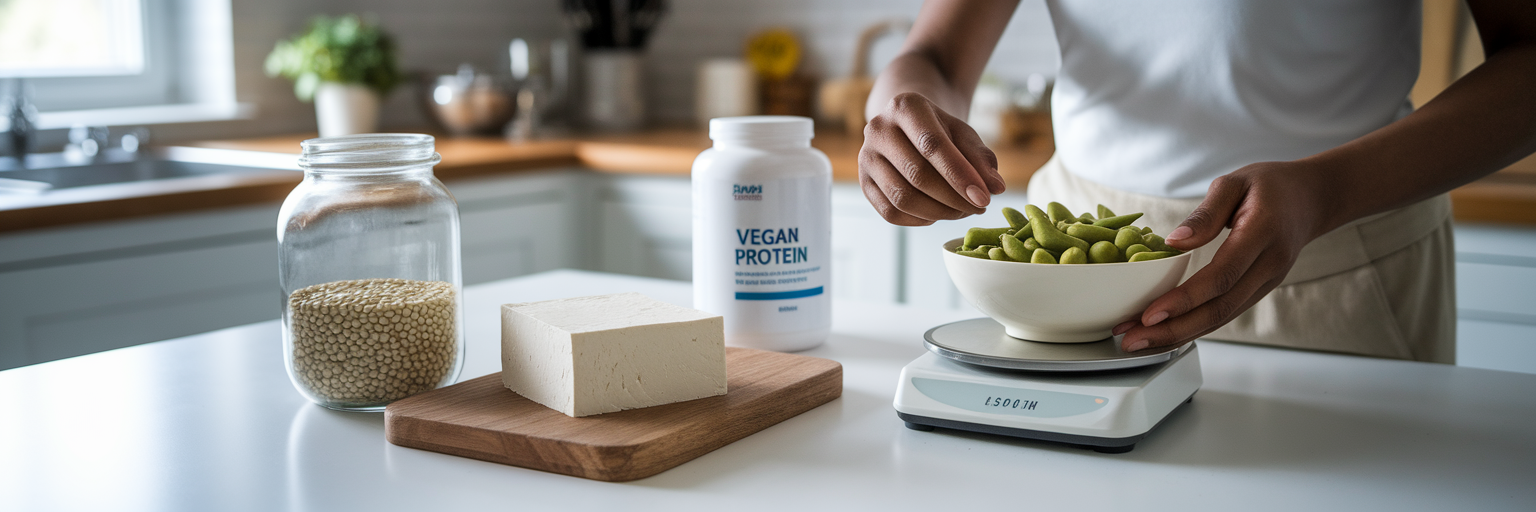
Now that you understand why protein is so important, let's figure out exactly how much you need. For active individuals in a calorie deficit, the goal is to protect muscle mass. According to guidance from the National Academy of Sports Medicine (NASM), a target of 1.6 to 2.2 grams of protein per kilogram of body weight is effective.
On a plant-based diet, hitting this number requires a little planning. Here’s a simple way to calculate your personal daily goal:
- Find your weight in pounds.
- Convert it to kilograms by dividing by 2.2.
- Multiply that number by 1.6 (for your lower-end goal) and 2.2 (for your higher-end goal) to find your daily protein range in grams.
It’s not just about the quantity; it’s also about the quality. Your body needs all nine essential amino acids to effectively repair muscle. These are known as a "complete" amino acid profile. While some plant foods are incomplete on their own, you can easily get everything you need by combining different sources like beans, rice, nuts, and seeds. A well-formulated vegan protein powder is designed to provide this complete profile in one convenient scoop, making it easier to meet your goals. You can explore some of our clean, complete protein options to see what fits your routine.
Sample Daily Protein Targets for Weight Loss
This table provides a quick reference based on the recommended 1.6–2.2 grams of protein per kilogram of body weight. Find your approximate weight to see a practical daily protein target to aim for.
| Your Weight (lbs) | Your Weight (kg) | Daily Protein Goal (grams) |
|---|---|---|
| 130 lbs | 59 kg | 94 - 130 g |
| 150 lbs | 68 kg | 109 - 150 g |
| 170 lbs | 77 kg | 123 - 169 g |
| 190 lbs | 86 kg | 138 - 189 g |
| 210 lbs | 95 kg | 152 - 209 g |
Creative Ways to Integrate Vegan Protein Powder
Meeting your protein target shouldn't feel like a chore. While a post-workout shake is a classic for a reason, there are so many other ways to incorporate vegan protein into your day. Thinking beyond the shaker cup makes it easier and more enjoyable to stay on track. As noted by sources like CNET, integrating protein into meals you already love is a smart strategy.
Here are a few creative ideas to get you started:
- Morning Boost: Turn your breakfast into a powerhouse meal. Blend a scoop of protein powder into a smoothie with spinach, frozen berries, and a tablespoon of chia seeds. A naturally flavored option like our chocolate vegan protein works perfectly here.
- Midday Fuel: Fortify your favorite meals. Stir an unflavored or vanilla protein powder into your morning oatmeal, a bowl of plant-based yogurt, or even your pancake batter. It boosts protein and helps keep you full until your next meal.
- Savory Applications: This is one of the most overlooked plant based protein powder recipes. Add a scoop of unflavored protein powder to soups, stews, or tomato sauces. It thickens them slightly and adds a significant protein punch without changing the taste.
- Post-Workout Recovery: Timing matters. Consuming protein within 30-60 minutes after resistance training helps kickstart the muscle repair process. A rapidly absorbed powder mixed with water or plant milk is ideal for this window.
By weaving protein powder into your daily routine, you ensure a steady supply of amino acids to your muscles. For more inspiration, check out these easy vegan protein recipes you'll actually crave.
What to Look for in a Quality Vegan Protein Powder
With so many options available, choosing the right vegan protein for weight loss can feel overwhelming. The key is to know what to look for on the label. Most vegan powders are made from pea, rice, soy, or hemp protein. Blends of these sources, particularly pea and rice, are often excellent because their amino acid profiles complement each other, creating a complete protein.
Here are a few things to check for when you're comparing products:
- Complete Amino Acid Profile: Ensure the label states it contains all nine essential amino acids, especially if it's a blend. This is non-negotiable for muscle preservation.
- High BCAA Content: Branched-Chain Amino Acids (Leucine, Isoleucine, and Valine) are particularly important for triggering muscle protein synthesis.
- No Artificial Additives: Look for a clean ingredient list without artificial sweeteners, colors, or fillers. Your body doesn't need them.
- Low in Sugar: A quality powder should be low in sugar to support your weight loss goals without adding unnecessary calories.
Let's talk about texture. We’ve all heard the complaints about gritty, chalky powders. The good news is that modern vegan proteins have come a long way. At Beyond Good Foods, we've focused on creating a smooth, easily mixable texture so you can actually enjoy your shakes. As highlighted in reviews from outlets like Breaking Muscle, the best powders today deliver on both nutrition and taste. Always choose brands that are transparent about their ingredients and manufacturing processes.
Common Weight Loss Pitfalls and How to Avoid Them
You have the science and the strategy, but sometimes things can still go off track. Knowing the common pitfalls ahead of time can help you navigate your journey successfully. Here’s how to sidestep them.
- The Too-Aggressive Calorie Deficit: It’s tempting to slash calories drastically for faster results, but this can backfire. A severe deficit signals your body to conserve energy and burn muscle. Aim for a sustainable 15-20% calorie deficit to encourage fat loss while preserving lean mass.
- Relying on a Single Plant Protein Source: Variety is key. Relying only on one type of whole food protein, like lentils, might leave you short on certain amino acids. Mix it up with tofu, tempeh, quinoa, and a well-formulated protein blend to cover all your bases.
- Forgetting Resistance Training: Diet and exercise work together. Protein provides the building blocks, but resistance training is the signal that tells your body how to preserve muscle on a diet. Lifting weights, bodyweight exercises, or resistance bands tell your body, "Hey, we need this muscle!" To support your strength and performance, you might also consider a supplement like our pure creatine monohydrate.
- Inconsistent Protein Distribution: Having all your protein in one giant meal isn't as effective as spreading it out. Aim to include a good source of protein in each meal and snack. This keeps muscle protein synthesis elevated throughout the day and improves satiety, which, as WebMD reports, is a major benefit for weight management. This makes planning high protein vegan meal ideas a crucial part of your success.
By avoiding these common mistakes, you set yourself up for sustainable fat loss that reveals the strong, healthy body you're working for. Ready to get started? Share this guide with a friend or explore our products to find the perfect fit for your goals!