

The Post-Climb Problem: Muscle Breakdown and Fatigue
We all know the feeling. You peel yourself off the bouldering wall after one last attempt on your project. Your forearms are burning with that familiar pump, your shoulders ache, and a deep exhaustion sets in. It’s a satisfying feeling, but it’s also a clear signal from your body. That soreness is the direct result of tiny micro-tears in your muscle fibers, a natural consequence of pushing your limits.
Think of it like this: every hard move you make creates small, controlled stress on your muscles. The body’s response is to repair this damage, and in doing so, it builds the muscle back a little bit stronger than before. This repair process is exactly where strength gains happen. It’s how you eventually stick that dyno or hold that tiny crimp.
But here’s the catch: that repair process requires the right fuel. Without proper rock climbing recovery nutrition, you’re not giving your body the tools it needs to rebuild. This can lead to nagging fatigue, a noticeable drop in grip strength on your next session, and a higher risk of injury. For any climber serious about progress, recovery isn't just a suggestion; it's a non-negotiable part of the training cycle.
Protein's Role in Rebuilding for the Wall
If muscle breakdown is the problem, then protein is the solution. After a tough climbing session, your body kicks off a process called Muscle Protein Synthesis (MPS). This is where the magic of recovery happens. The best way to picture it is to think of amino acids, the building blocks of protein, as a dedicated construction crew arriving on-site. Their job is to patch up those micro-tears in your muscle fibers, making them more resilient for the next climb.
This is precisely how plant based protein for muscle repair supports your goals. But how much do you actually need? According to experts at Training For Climbing, strength and endurance athletes should aim for 1.2 to 2.0 grams of protein per kilogram of body weight each day. For climbers, who rely on an optimal strength-to-weight ratio, hitting this target is essential for building power without unnecessary bulk.
Timing also plays a part. In the 30 to 60 minutes after you finish climbing, your muscles are especially receptive to nutrients. This period, often called the "anabolic window," is the prime opportunity to deliver that construction crew of amino acids right where they’re needed most. This highlights the need for a protein source that is not only effective but also incredibly fast and convenient.
Why Choose Vegan Protein for Quick Recovery
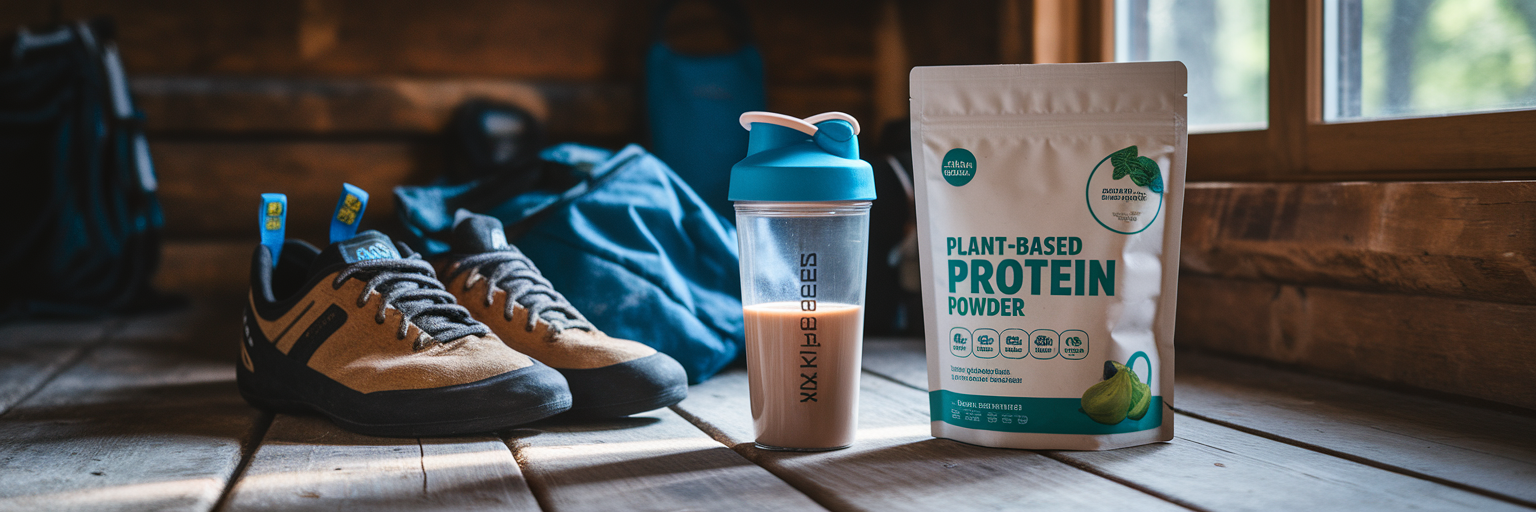
For a climber, what you consume post-session needs to be efficient, effective, and easy. This is where a high-quality vegan protein powder truly shines, offering a few distinct advantages that fit the climbing lifestyle perfectly.
Unbeatable Convenience for the Crag or Gym
Let’s be honest, no one wants to cook a full meal in the parking lot of the climbing gym. The beauty of a protein shake is its simplicity. You can throw a shaker bottle and a scoop of powder into your climbing bag and have the best post climbing recovery drink ready in seconds. It’s a practical solution that ensures you never miss that crucial recovery window, whether you’re at a remote crag or your local gym.
Gentle on Your System
A heavy meal after a workout can sometimes leave you feeling bloated or sluggish, which is the last thing you want after an intense session. Modern vegan protein isolates are specifically formulated to be easy on the digestive system. A high-quality powder like our chocolate vegan protein mixes smoothly without the chalky texture some people associate with plant proteins, delivering the nutrients you need without the digestive discomfort.
Nutrition That Aligns with Your Values
Many climbers share a deep appreciation for the outdoors and a desire to make sustainable choices. Opting for a plant-based protein source allows you to fuel your body in a way that aligns with those values. Our clean, effective formulas are designed to support your climbing goals without compromise, giving you a recovery option you can feel good about, inside and out.
| Recovery Factor | Vegan Protein Shake | Home-Cooked Meal | Waiting (No Immediate Fuel) |
|---|---|---|---|
| Speed of Nutrient Delivery | Very Fast (15-30 mins) | Slow (1-2 hours) | Very Slow (2+ hours) |
| Convenience | High (Pack & go) | Low (Requires prep/cooking) | N/A |
| Digestibility | High (Easy to absorb) | Variable | Can lead to overeating later |
| Targeted Nutrition | Precise protein & carb ratio | Can be balanced, but requires planning | Misses key recovery window |
Building a Complete Amino Acid Profile with Plants
One of the most persistent myths about plant-based diets is the idea of "incomplete" proteins. It’s a common concern, but for modern vegan protein for athletes, this is an outdated notion. The key lies in smart formulation. By blending different plant protein sources, we can create a robust and complete amino acid profile that stands shoulder-to-shoulder with animal-based proteins.
For instance, pea protein is naturally high in the amino acid lysine, while rice protein is rich in methionine. When you combine them, they complement each other perfectly. In fact, as noted by reviewers at GarageGymReviews, blending pea and rice protein is a popular and effective strategy to create a complete amino acid profile that supports muscle growth.
A well-formulated vegan protein blend offers everything your muscles need:
- Provides all 9 essential amino acids required for comprehensive muscle repair.
- High in Leucine, the key amino acid that acts as the "on" switch for Muscle Protein Synthesis.
- Delivers a full spectrum of Branched-Chain Amino Acids (BCAAs) to reduce muscle soreness.
- Ensures you get everything you need in one simple, convenient scoop.
So, rest assured. With a quality blend, you are not making a compromise. You’re giving your body a clean, powerful, and complete tool for recovery, making your post-workout nutrition simple and foolproof.
Beyond Protein: Essential Nutrients for Climbers

While protein is the star player in muscle repair, a truly effective recovery plan looks at the bigger picture. To fully understand what to eat after climbing, we need to consider a few other key nutrients that support performance and recovery.
First up is creatine. As a climber, you rely on short bursts of intense power for crux moves. That power is fueled by a molecule called ATP. Creatine for rock climbers is beneficial because it helps your body rapidly regenerate ATP, allowing you to pull harder for longer. Since creatine is primarily found in meat, supplementing with a pure powder like our Creatine Monohydrate is particularly helpful for plant-based athletes. If you want to learn more, we explore the benefits of creatine in detail on our blog.
Next, don't forget carbohydrates. They are your body's primary fuel source, stored in your muscles as glycogen. An intense climbing session depletes these stores, and replenishing them is crucial for being ready for your next workout. Combining protein with carbs in your post-climb shake is the perfect one-two punch for recovery.
Here’s how to build the perfect recovery shake:
- Protein Base: 1 scoop of your favorite vegan protein powder.
- Carb Source: 1 banana or 1/2 cup of oats to restore glycogen.
- Liquid: 12 oz of water or plant-based milk for hydration.
Finally, remember to rehydrate with plenty of water. You lose a surprising amount of fluid and electrolytes through sweat, and replenishing them is fundamental to feeling your best.
Integrating Vegan Protein into Your Climbing Routine
Making vegan protein a part of your climbing life is simple. The most effective time to have a shake is within an hour of finishing your session to kickstart that recovery process. A simple shake with a scoop of protein, a banana, and some almond milk is a fantastic go-to.
But you can also use it strategically at other times. A small shake about 90 minutes before you climb can provide sustained energy without weighing you down. On rest days, adding a scoop to your morning oatmeal or a smoothie helps your body continue the repair process, ensuring you’re fully recovered for your next session.
If you're looking for inspiration beyond a simple shake, we have some easy vegan protein recipes you'll love. Ultimately, the goal is to listen to your body and find a routine that helps you feel strong and ready to climb your best. Explore clean nutrition options that support your passion, and don't forget to share your own recovery tips with the community!