

A Delicious Way to Boost Your Plant-Based Meals
If you love plant-based eating, you've probably faced the challenge of creating meals that are both incredibly tasty and genuinely packed with protein. It’s a common search for something that satisfies cravings without falling short on nutrition. What if we told you the secret to a better meatball was already in your pantry? We’re talking about adding a scoop of unflavored vegan protein powder to your favorite plant based meatball recipe.
This isn't some strange kitchen experiment. It's a simple, brilliant hack to make your meals more satisfying and nutritionally powerful. By incorporating a clean protein powder, you’re not just adding substance; you’re creating food that works harder for you. Think better muscle recovery after a workout and that pleasant feeling of fullness that keeps you energized for hours.
This recipe is designed to give you confidence in the kitchen. We’ll walk you through every step, sharing tips to get that perfect texture and savory flavor. Get ready to create a meal that’s as delicious as it is supportive of your wellness goals.
Why Add Protein Powder to Vegan Meatballs?
Moving beyond the basic idea, let's look at the specific reasons this technique is so effective. Adding protein powder isn't just for shakes anymore; it’s a smart move for savory cooking, and here’s why.
First, it provides a significant protein boost. While Textured Vegetable Protein (TVP) forms a great base, adding a scoop of protein powder can dramatically increase the protein content of your meal, helping you hit your daily targets with ease. This is especially important for anyone focused on muscle growth or post-workout recovery.
Second, it improves the texture. We’ve all had a homemade vegan meatball that was a bit too crumbly or mushy. A quality vegan protein isolate acts as a fantastic binder. It helps create a denser, more satisfying chew that holds together perfectly whether you bake or pan-fry them. This is the key to avoiding that dreaded fall-apart texture.
Finally, cooking with vegan protein powder is a growing trend for a reason. As highlighted by Aloha.com, sales for "cooking-grade" protein powders have seen a notable increase as more people discover their versatility. The trick is using an unflavored powder, which allows the savory, umami flavors of your spices and herbs to shine. Choosing a clean, high-quality powder is essential, and if you need guidance, you can learn more about what makes the best protein powders for your kitchen adventures.
Your High-Protein Meatball Ingredient Checklist
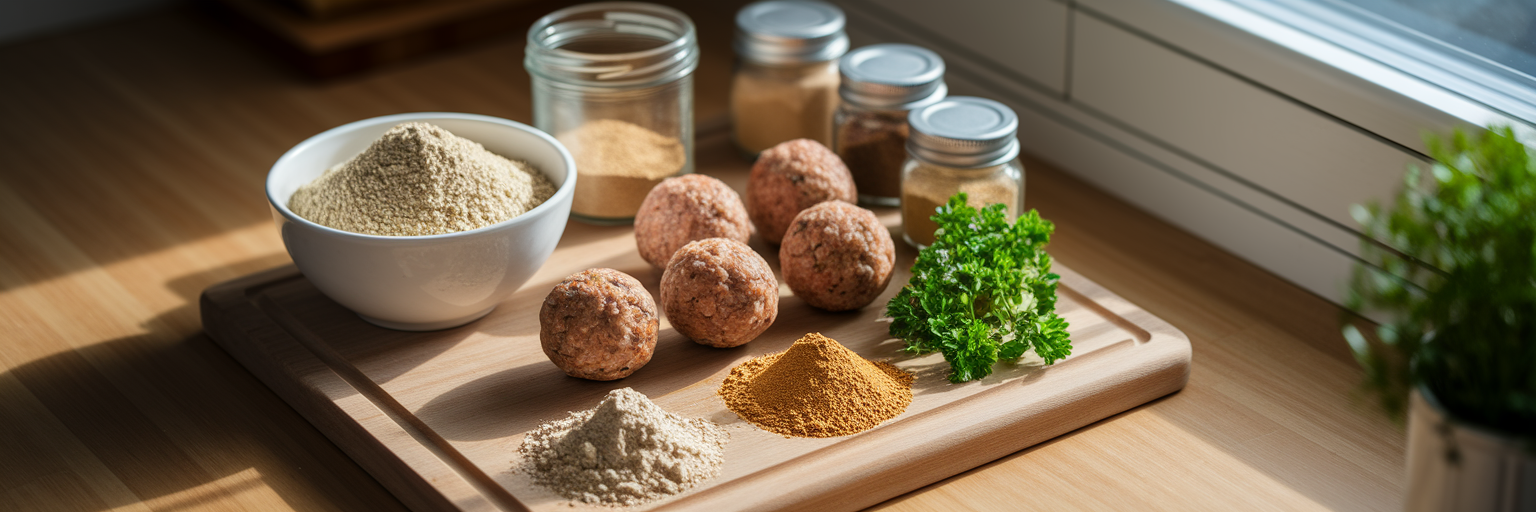
To make things easy, we’ve broken down your shopping list into four simple categories. Having everything ready to go makes the process smooth and enjoyable.
The Meatball Base
- Textured Vegetable Protein (TVP): 1 cup, dry. This is what creates that classic "meaty" texture.
- Low-Sodium Vegetable Broth: 1 cup, hot. For rehydrating the TVP and infusing flavor.
The Protein Boost
- Unflavored Vegan Protein Powder: 1/2 cup. A pea or rice protein blend works wonderfully due to its neutral taste.
The Binders
- Flax Egg: 2 tablespoons ground flaxseed + 5 tablespoons water. This is crucial for holding everything together.
- Oat Flour: 1/2 cup. You can make your own by blending rolled oats until fine.
The Flavor Pack
- Low-Sodium Soy Sauce or Tamari: 2 tablespoons.
- Nutritional Yeast: 3 tablespoons for a cheesy, savory depth.
- Garlic Powder: 1 teaspoon.
- Onion Powder: 1 teaspoon.
- Smoked Paprika: 1 teaspoon.
- Dried Oregano: 1 teaspoon.
- Black Pepper: 1/2 teaspoon.
Step-by-Step Guide to Forming the Perfect Meatballs
Now for the fun part! This simple process shows you exactly how to make vegan meatballs that are firm, flavorful, and packed with protein. Just follow these steps.
- Rehydrate the TVP: In a large bowl, combine the dry TVP with the hot vegetable broth. Stir well and let it sit for about 10 minutes until all the liquid is absorbed and the TVP is soft.
- Mix the Dry Ingredients: While the TVP is rehydrating, whisk together the unflavored protein powder, oat flour, nutritional yeast, and all the spices in a separate bowl. This ensures the flavor is evenly distributed.
- Prepare and Add Binders: In a small bowl, mix your ground flaxseed and water to create the flax egg. Let it sit for 5 minutes to thicken. Add the flax egg and soy sauce to the rehydrated TVP.
- Combine and Rest: Add the dry ingredient mixture to the wet TVP mixture. Use your hands to combine everything until it forms a thick, dough-like consistency. Here’s a great tip shared in vegan cooking communities: let the mixture rest for 10 minutes. As noted by home cooks on platforms like Facebook, this allows the binders to fully hydrate, resulting in a much juicier final product.
- Shape the Meatballs: Scoop about 2 tablespoons of the mixture at a time and roll it between your palms to form a ball. This recipe should yield about 18-20 meatballs. Place them on a parchment-lined baking sheet.
Once you master this, you'll be ready to explore even more creative dishes. We've put together some other easy vegan protein recipes to inspire your next meal.
Cooking Your Meatballs for Optimal Taste and Texture
You have two excellent options for cooking this vegan meatball recipe TVP. Your choice depends on whether you prefer a hands-off approach or a crispy, golden-brown finish.
Method 1: Baking for an Easy, Oil-Free Option
Preheat your oven to 390°F (200°C). Arrange the meatballs on a parchment-lined baking sheet and bake for 20-25 minutes, turning them halfway through. They’re done when they are firm and lightly browned. This method is perfect for an easy, low-mess meal.
Method 2: Pan-Searing for a Crispy, Golden-Brown Crust
Heat a tablespoon of olive or avocado oil in a large non-stick skillet over medium heat. Carefully place the meatballs in the pan, ensuring not to overcrowd it. Cook for about 8-10 minutes, turning every couple of minutes until all sides are beautifully golden-brown and crispy. For perfect results, many recipes, like one from Kenwood, suggest checking for an internal temperature of 160°F (70°C).
| Factor | Baking | Pan-Searing |
|---|---|---|
| Texture | Firm and uniform, slightly softer interior | Crispy, golden-brown exterior with a juicy interior |
| Flavor | Evenly cooked, lets the seasoning shine | Richer, caramelized flavor from the crust |
| Oil Usage | Minimal to none (oil-free option) | Requires a small amount of oil for frying |
| Effort Level | Low (set it and forget it) | Medium (requires active turning and attention) |
This table summarizes the key differences between baking and pan-searing your vegan meatballs. Use it to decide whether you prefer an easy, oil-free method or a classic, crispy finish.
Serving Suggestions and Storage Tips
These meatballs are incredibly versatile, making them a fantastic staple for meal prep. Here are a few ideas to get you started, along with tips for keeping them fresh.
- Serving Ideas: Toss them with marinara sauce for a classic spaghetti and meatballs, stuff them into a sub roll with melted vegan cheese, or serve them as an appetizer with a zesty dipping sauce.
- Refrigerator Storage: Store cooked meatballs in an airtight container in the fridge for up to 5 days. They are perfect for quick lunches or dinners throughout the week.
- Freezer Storage: For longer storage, place the cooked and cooled meatballs on a baking sheet in a single layer and freeze for an hour. This "flash-freezing" prevents them from sticking together. Once solid, transfer them to a freezer-safe bag or container for up to 3 months.
- Reheating: You can reheat them in the microwave, on the stovetop in a bit of sauce, or in the oven until warmed through.
The Nutritional Punch of Your Homemade Meatballs
Let’s talk about the best part: the results. Each of these delicious meatballs packs a serious nutritional punch, with around 10-13 grams of protein. This makes them an ideal post-workout meal to support muscle repair or a fantastic way to ensure your plant-based dinners are truly satisfying and sustaining.
By making these high protein vegan meatballs, you’re taking control of your nutrition without sacrificing flavor. You’re creating food that fuels your body and aligns with your wellness goals.
Ready to experience the difference yourself? Give this recipe a try and discover how simple it is to create powerful, plant-based meals. To get started, explore our collections of clean, effective products designed to support your journey.