

Why Runners Need Specialized Nutrition
Every runner knows the feeling. The early morning alarm, the rhythmic sound of feet on pavement, and the quiet satisfaction of pushing past your limits. But the physical training is only half the equation. The other half happens in your kitchen, and it’s what allows your body to repair, rebuild, and come back stronger for the next run.
Endurance exercise, like running, creates microscopic tears in your muscle fibers. This is a normal part of getting stronger, but it requires the right building blocks to heal properly. That’s where protein comes in. For runners, protein isn’t just about building bulk; it’s about fundamental repair and recovery. Without enough of it, you risk fatigue, slower recovery times, and a plateau in your performance.
So, how much do you actually need? According to sports nutrition guidelines highlighted by Runner's World, endurance athletes should aim for 1.3–1.7 grams of protein per kilogram of body weight daily to support muscle repair. This is significantly more than what a sedentary person requires.
Meeting these elevated needs with whole foods alone can be a challenge, especially on busy training days. This is where a high-quality vegan protein powder for runners becomes an incredibly efficient tool. It provides a concentrated, easily digestible source of protein right when your body needs it most. Understanding these nutritional demands is the first step, and for more insights into athletic wellness, our blog offers a wealth of information.
What Makes a Vegan Protein Powder Effective
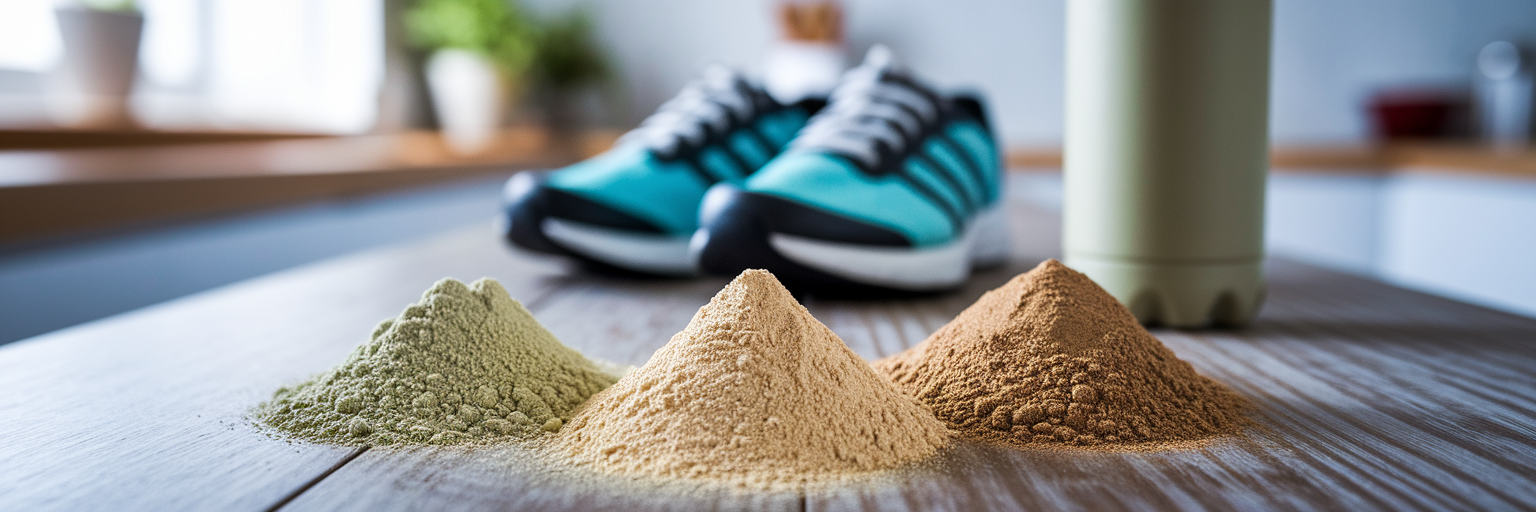
Now that we understand why protein is so important for runners, let's look at what separates an effective vegan protein powder from the rest. It’s not just about the total grams of protein on the label; it’s about the quality and composition of that protein.
The Power of a Complete Amino Acid Profile
Think of protein as a wall and amino acids as the individual bricks. To build a strong, stable wall, you need every type of brick. A "complete protein" is one that contains all nine essential amino acids—the ones your body can't produce on its own. For runners, a complete protein source ensures your muscles have all the necessary materials for efficient repair and growth after a tough workout.
BCAAs: The Key to Muscle Repair
Within those nine essential amino acids, three are particularly important for athletes: the Branched-Chain Amino Acids (BCAAs) leucine, isoleucine, and valine. Leucine, in particular, acts as the primary trigger for muscle protein synthesis. It’s like the foreman on a construction site, signaling the body to start the rebuilding process. A formula rich in vegan BCAA for muscle recovery can help reduce muscle soreness and accelerate your return to the road. As noted in an analysis by VeganProteinPowder.reviews, the most effective formulas for runners provide a complete amino acid profile with a high concentration of BCAAs.
Why Clean, Whole-Food Blends Matter
The source of the protein matters, too. Many runners experience digestive discomfort, so a powder that’s easy on the stomach is essential. High-quality blends made from pea, pumpkin, or sunflower seeds offer a plant based protein for endurance that is minimally processed. This often translates to better digestion and less bloating compared to some heavily processed isolates. The myth that plant proteins are poorly absorbed has been widely debunked; high-quality pea protein, for instance, is absorbed just as efficiently as whey, making it a powerful and gentle option for athletes.
Calculating Your Personal Protein Needs
So, you’re ready to optimize your protein intake, but what’s your personal target? While general guidelines are helpful, your exact needs depend on your training volume. A guide for vegan endurance athletes from Endurance Horizon suggests a target of 1.2–1.6 grams of protein per kilogram of body weight. This slightly higher range helps account for the digestibility of some plant-based sources, ensuring your body gets what it needs.
Let’s make this practical. If you’re a 150 lb (68 kg) runner:
- First, convert your weight to kilograms: 150 lbs / 2.2 = 68 kg.
- Next, multiply by the recommended factor. For moderate training (1.4 g/kg): 68 kg x 1.4 = 95 grams of protein per day.
Timing is also important. Aim to consume 20-25 grams of protein within 30-60 minutes after your run to kickstart the recovery process. Remember, a powder is a supplement to a balanced diet, not a replacement for it. Use it to fill the gaps and meet your goals on heavy training days.
| Training Level | Protein Recommendation (per kg of body weight) | Example Daily Intake (for a 150 lb / 68 kg runner) |
|---|---|---|
| Light Training (3-4 runs/week) | 1.2 g/kg | Approx. 82 grams |
| Moderate Training (5-6 runs/week) | 1.4 g/kg | Approx. 95 grams |
| High-Volume Training (Marathon prep) | 1.6 g/kg | Approx. 109 grams |
Note: These recommendations are based on guidelines for vegan endurance athletes and can be adjusted based on individual training intensity and goals. Always listen to your body.
Reading the Label: What to Look For and Avoid

Walking down the supplement aisle can feel overwhelming. With so many options, how do you choose the right one? The secret is learning to read the ingredient list like a pro. A short, understandable label is almost always a sign of a higher-quality product.
Here’s a simple checklist to guide you:
What to Look For:
- High-Quality Protein Sources: Look for blends of pea, pumpkin seed, sunflower seed, or brown rice protein to ensure a complete amino acid profile.
- 20-25g of Protein Per Serving: This is the ideal amount to stimulate muscle repair post-workout.
- Clean Ingredients: A clean plant protein for athletes should have a simple formula without a long list of chemicals.
- Third-Party Certifications: Labels like NSF Certified for Sport guarantee the product is free from banned substances, a crucial factor for competitive athletes.
Red Flags to Avoid:
- Artificial Sweeteners: Ingredients like sucralose and aspartame can cause digestive issues for some runners. Look for natural sweeteners like monk fruit or stevia.
- Fillers and Gums: Excessive use of gums (like xanthan gum) or fillers can lead to bloating and discomfort, the last thing you want on a run.
- Proprietary Blends: These hide the exact amounts of each ingredient, making it impossible to know what you’re truly getting.
A dietitian-approved guide from Runner's World UK advises athletes to carefully check labels and prioritize powders that are third-party tested. Finding a powder that meets these standards is key. Our Chocolate Vegan Protein, for example, is crafted with a simple, transparent ingredient list to support your performance without compromise.
Beyond the Shaker: Creative Ways to Use Vegan Protein
Let’s be honest, even the best-tasting protein shake can get a little repetitive. The good news is that protein powder is incredibly versatile. Integrating it into meals and snacks you already love is an easy way to boost your intake without feeling like it’s a chore. Here are a few ideas to get you started:
- Build the Best Vegan Recovery Shake: Start with a base of unsweetened plant milk, add one scoop of protein powder, a handful of spinach (you won’t taste it!), half a frozen banana for creaminess, and a spoonful of nut butter for healthy fats. It’s a simple, effective, and delicious recovery tool.
- Power Up Your Breakfast: Stir a scoop of vanilla or unflavored protein powder into your morning oatmeal or yogurt bowl. It adds a creamy texture and a powerful protein punch to start your day strong.
- Create No-Bake Energy Bites: Mix protein powder with rolled oats, nut butter, and a touch of maple syrup. Roll into bite-sized balls and refrigerate for a perfect pre-run snack or afternoon pick-me-up.
- Think Savory: Don’t forget that unflavored protein powder can be your secret weapon in the kitchen. Whisk a scoop into soups, stews, or pasta sauces to increase the protein content of your favorite savory meals without altering the taste.
For more inspiration on how to incorporate protein into your meals, check out these three easy vegan protein recipes you'll actually crave.
The Future of Plant-Based Performance Nutrition
The conversation around sports nutrition is changing. More and more athletes are recognizing that you don't need animal products to perform at your peak. This shift is backed by data, with one report in early 2025 noting a significant year-over-year growth in vegan supplement purchases among endurance athletes, as mentioned on Believe in the Run.
We’re seeing exciting innovations in the space, from hybrid protein blends designed for optimal amino acid profiles to holistic formulas that include micronutrients for bone health and muscle function. Above all, athletes are demanding sustainability and transparency, choosing brands that align with their values.
Using a vegan protein powder for runners is no longer an alternative; it’s a strategic choice for performance, recovery, and long-term health. Ready to experience the difference yourself? Discover our complete collection of plant-based nutrition designed for athletes like you.